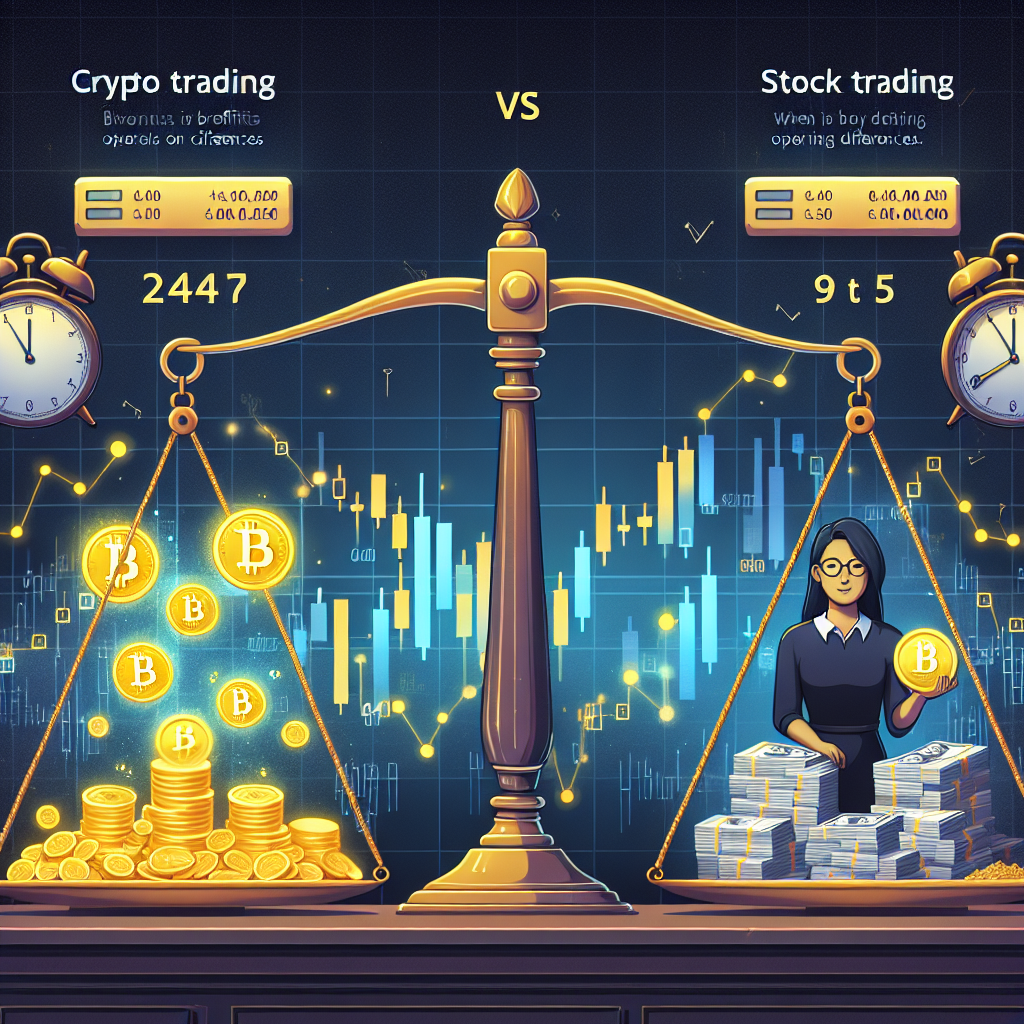
Crypto Trading vs Stock Trading: Key Differences
The world of trading has undergone a dramatic transformation with the rise of cryptocurrencies. While stock trading has a storied history, crypto trading is relatively new, offering unique opportunities and challenges. This article explores the key differences between crypto trading and stock trading, providing insights for both budding and experienced traders.
Understanding the Markets
Before diving into the differences, it's essential to understand the two markets.
Stock Markets
Stock trading involves buying and selling shares of publicly traded companies. This market is regulated by government bodies such as the Securities and Exchange Commission (SEC) in the United States, which provides a framework aimed at protecting investors.
Crypto Markets
In contrast, crypto trading involves buying and selling cryptocurrencies such as Bitcoin, Ethereum, and thousands of altcoins. This market operates largely outside of traditional regulatory frameworks, with many exchanges being unregulated or lightly regulated.
Liquidity and Volatility
Both markets exhibit different levels of liquidity and volatility.
Liquidity
- Stocks: Stock markets have higher liquidity due to the presence of established companies and a larger number of institutional investors. Large volumes of shares are traded, making it easier to enter and exit positions.
- Cryptos: The liquidity in crypto markets can vary significantly. Major cryptocurrencies like Bitcoin and Ethereum have considerable liquidity, but smaller altcoins might not, leading to potential difficulties in executing large trades without affecting the price.
Volatility
- Stocks: Historical data suggests that stock markets are generally less volatile. For instance, the average daily price change for the S&P 500 historically averages around 1%, providing a more stable environment for investors.
- Cryptos: On the other hand, cryptocurrencies can exhibit extreme volatility. For example, Bitcoin's price has been known to fluctuate by 10-20% or more in a single day, presenting both risks and opportunities for traders.
Trading Hours and Accessibility
Another factor distinguishing stock trading from crypto trading is the availability of trading hours.
Stock Trading Hours
- Generally, stock markets operate during specific hours (e.g., the NYSE operates from 9:30 AM to 4 PM EST).
- Post-market and pre-market sessions exist but are limited and may see lighter trading volumes.
Crypto Trading Hours
- Cryptocurrency markets operate 24/7, allowing traders to buy and sell at any time.
- This constant accessibility appeals to many traders, particularly those engaging in day trading or reacting to market news.
Regulatory Environment
The regulatory landscape is a significant differentiator in these markets.
Stock Trading Regulations
- Stocks are governed by established financial regulations, providing investor protections.
- Companies must adhere to strict reporting and disclosure requirements, promoting transparency.
Crypto Trading Regulations
- Cryptocurrencies operate in a more ambiguous regulatory space, though this is gradually changing.
- While some countries have embraced cryptocurrency regulations, others are still working to create comprehensive frameworks.
Market Psychology and Investor Behavior
The motivations and behaviors of traders often differ between the two markets.
Investor Sentiment
- Stock investors often base decisions on company fundamentals such as earnings, market share, and economic conditions.
- Cryptocurrency investors may be more influenced by market sentiment, news cycles, and social media trends, sometimes leading to mob-like behaviors.
Conclusion
In conclusion, both crypto trading and stock trading present unique opportunities and challenges. While stocks offer greater stability, regulatory oversight, and established practices, cryptocurrencies provide high volatility, 24/7 trading, and potential for rapid gains. Investors must weigh these differences carefully, aligning their trading strategies with their risk tolerance and investment goals. Understanding the nuances between these two forms of trading can empower traders to make more informed decisions in the ever-evolving world of finance.